Evaluation Methodology and Baseline Assessment
Known facts
Analysis is conducted strictly from published technical sheets, marketplace listings, and verified buyer ratings across online marketplaces.
Evaluated units feature three-speed push-button selectors, USB recharging circuits, and stainless steel whisk attachments.
Analysis
Marketplace listings frequently advertise high rotational velocities without detailing real-world torque retention under fluid resistance.
Detachable shafts utilize unsealed friction-fit sockets on plastic motor collars, making alignment stability and water ingress critical mechanical considerations.
Uncertainties
Specific stainless steel alloy grades (such as grade 304 versus 201) are largely unstated in primary hardware documentation.
Exact lithium cell capacities and longevity curves across charging cycles are not disclosed by generic manufacturers.
Electro-Mechanical Specification Ledger
| Product | Listing Price (USD) | Motor Speed Modes | Whisk Configuration | Intended Culinary Task |
|---|---|---|---|---|
| Electric Milk Frother 2 In 1 Rechargeable Blender Stainless… | $6.07 | 3 Speeds | 2-in-1 Dual Whisks | Single-cup foam and drink mixing |
| UPGRADED Electric Coffee Frother/MILK Whisk+Egg Beater MINI… | $6.78 | 3 Speeds | Mini Whisk + Beater | Espresso beverage aeration |
| 3 Speeds USB Rechargeable Handheld Milk Frother Electric Coffee… | $8.12 | 3 Speeds | Circular Frother + Wire Beater | Matcha powder blending and milk froth |
| Handheld Wireless Double Stick Whisk, 3 Speed USB Rechargeable… | $10.10 | 3 Speeds | Double Stick Dual Whisks | Custard foam and light batter whipping |
| 3 In 1 Electric Milk Frother Rechargeable Milk Foam Maker… | $14.74 | 3 Speeds | 3-in-1 Triple Tool Heads | Multi-beverage station and protein mixing |
Mechanical and Electrical Realities
Speed Staging vs Splash Control
Three stepped speeds allow low-velocity powder wetting for matcha and protein before high-speed aeration, preventing container sloshing.
Friction-Fit Socket Wear
Removable shafts mount via friction collars. Repeated insertion and removal degrade collar tolerances over time, inducing rotational runout.
Charging Protocol Limitations
Sealed lithium circuits require standard 5V/1A or 5V/2A power sources and typically do not negotiate high-wattage USB-C Power Delivery.
Compact Entry Assemblies ($6.00 to $7.00 Range)
In the lowest pricing tier, the 2 In 1 Rechargeable Blender and the Upgraded Mini Blender provide essential 3-speed control paired with dual attachments. These tools deliver sufficient kinetic energy for standard dairy microfoaming in single mugs, but their ultra-light plastic housings offer minimal vibration damping.
Given the entry-level price point, these models minimize production costs through simplified motor housings and direct-drive friction sleeves, making gentle insertion mandatory to prevent shaft distortion.


Mid-Range and Dual-Shaft Drive Units ($8.00 to $10.50 Range)
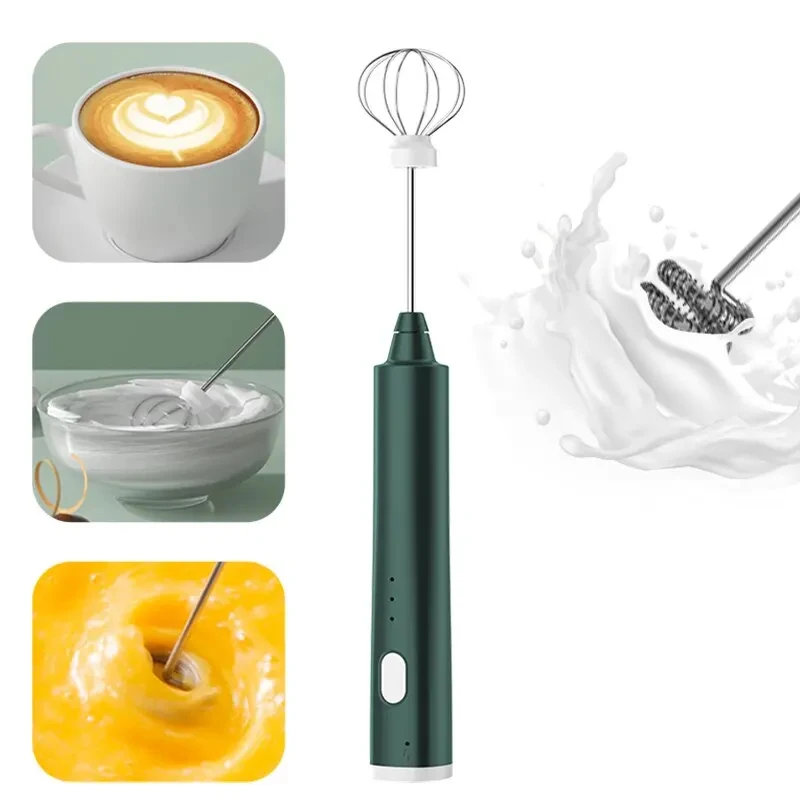
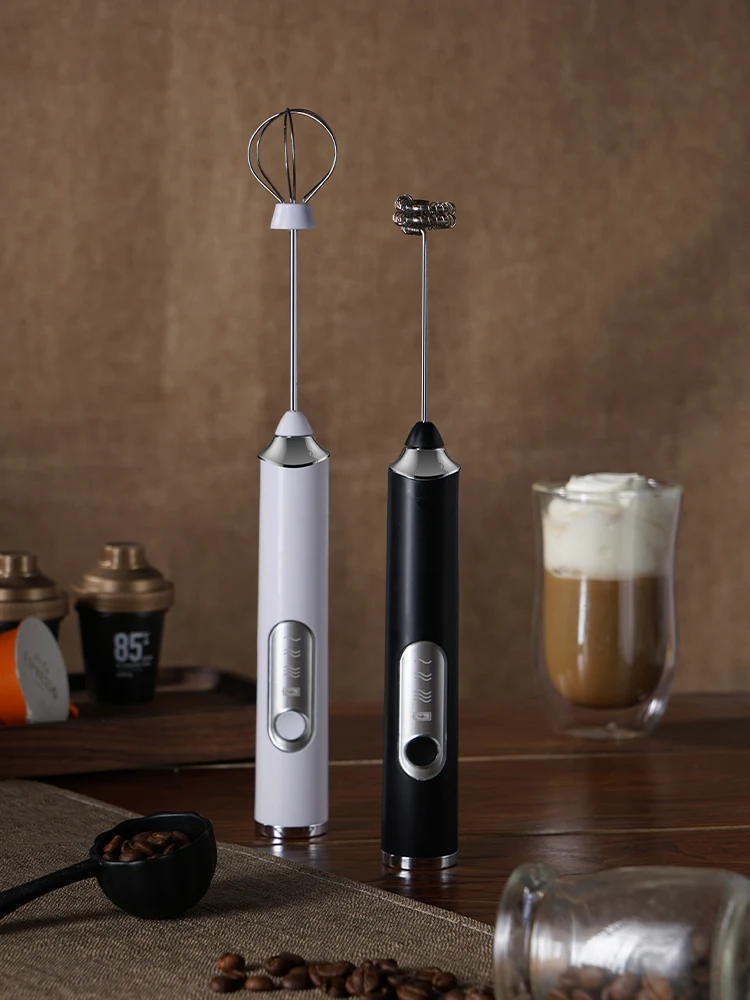
Moving up to the 3 Speeds USB Rechargeable Wand provides a standard cylindrical chassis optimized for powder blending, such as green tea and supplements, using low-speed initiation to eliminate splash.
The Handheld Wireless Double Stick Whisk alters the physical layout entirely, using a wider chassis designed to drive dual shafts concurrently. This configuration doubles contact surface area, stabilizing movement through viscous liquids like custard foams and pancake batters without stalling the motor.
Maximum Modular Setup ($14.00+ Range)
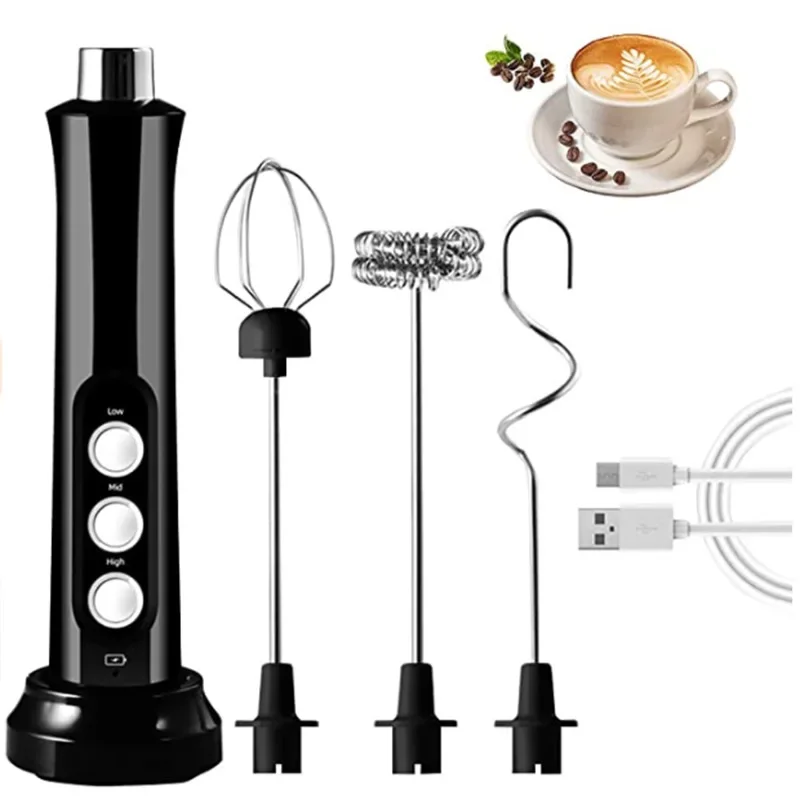
At the top of the category spectrum, the 3 In 1 Foamer supplies three specialized heads to cover fine milk aeration, high-aeration egg whipping, and heavier liquid blending within one package.
While it demands the highest relative financial investment, it consolidates multiple handheld tools into a single rechargeable motor handle for varied kitchen workflows.
Architecture Durability vs. Listing Cost Trade-Offs
Pros
- Rechargeable USB lithium power eliminates recurring disposable battery expenses across all models.
- Three-speed electronic stepping matches rotational torque to fluid viscosity, reducing drink overflow.
- Interchangeable stainless steel attachments expand utility from coffee foam to eggs and powders.
Cons
- Unsealed drive sockets allow liquid ingress into internal electronics if washed under running taps.
- Non-replaceable internal lithium cells introduce permanent product expiration once cycle life degrades.
- Budget mechanical tolerances can lead to shaft wobble under lateral resistance.
Operational and Handling Safeguards
- Charging Source CheckUse 5V/1A or 5V/2A standard USB charging ports rather than high-wattage USB-C fast-chargers.
- Washing OrientationClean only detachable metal whisks; never submerge the plastic motor handle or wash it inverted under a tap.
- Viscosity ModerationReserve micro-motors for low-viscosity liquids, avoiding nut butters or heavy doughs that cause motor stalls.
Physical and Structural Limitations
- Stainless steel whisk heads do not state standardized metallurgical grades (such as food-grade 304 versus lower-tier 201), leaving corrosion resistance uncertified over prolonged moisture exposure.
- Motor housings lack IP-rated water sealing around the shaft socket, rendering internal electronics vulnerable to steam and splash damage.
- Integrated lithium cells are non-serviceable; battery degradation results in diminished rotational torque that cannot be resolved with cell replacement.
- Friction-fit retention collars wear with repetitive attachment cycles, causing cumulative runout and whisk vibration.
Specification Verdict
Select the $8.12 three-speed wand for single-cup coffee and powder mixing, or step up to the $10.10 double-stick whisk for thicker mixtures and small-batch baking.
Entry-level units under $7 deliver identical three-speed control for basic foaming, but stepping to balanced single or dual-shaft platforms offers improved rotational stability and accessory flexibility without exceeding sub-$15 budget bounds.